Translating clinical mobility needs into manufacturable, durable, and consistent OEM/ODM cart designs.
Healthcare teams often compare computing specs, battery runtime, and EMR compatibility. Those factors matter. But at 3:00 a.m. on the hospital floor, a medical cart is judged first by something simpler: how it moves.
Time‑and‑motion studies show nurses can walk several miles in a single shift, much of it while pushing carts and mobile workstations. When a cart is hard to push, difficult to turn, or unstable, it creates micro‑delays that compound across the day. The result: added strain on staff, inefficiencies in care, and higher maintenance costs for hospitals. For an OEM/ODM manufacturing partner, solving these micro-delays isn't just about empathy—it's a rigorous engineering challenge.
The Hidden Cost of a “Heavy” Cart
A cart that resists movement doesn’t just slow workflows—it creates ripple effects across clinical care and facility operations:
- Physical Strain & Structural Wear: Excessive push effort increases repetitive load on staff while accelerating wear on the chassis and joints.
- Safety Risks & Maintenance Headaches: Struggling to maneuver in tight rooms raises the risk of collisions with walls or beds, leading to patient safety concerns and frequent repairs.
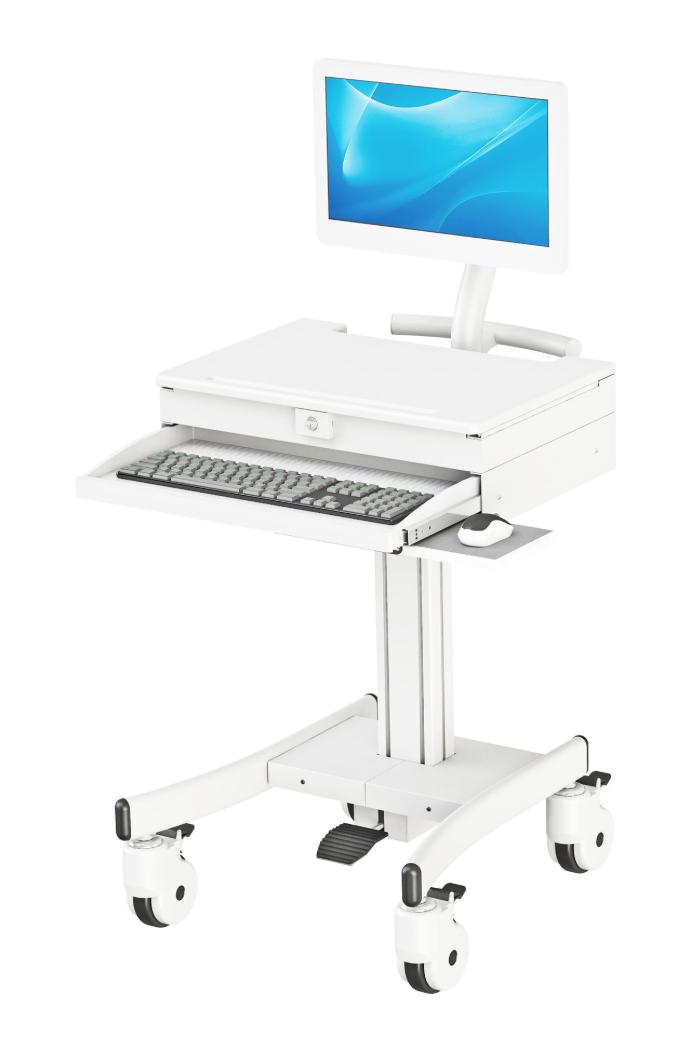
Engineering Mobility for Real‑World Use
Some carts feel smooth and controlled; others feel resistant and awkward. Achieving effortless, long‑lasting mobility requires linking engineering principles directly to manufacturability and durability:
- Rolling Resistance & Caster Integration Medical‑grade casters are only the beginning. Precision engineering of the mounting structure and alignment during mass production ensures even wear and consistent mobility over years of use.
- Center of Gravity & Structural Stability As carts carry heavier monitors, batteries, and accessories, they risk becoming top‑heavy. Smart base design and optimized weight distribution lower the center of gravity, guaranteeing anti‑tip stability without unnecessary costs or dead weight.
- Turning Performance & Frame Rigidity Patient rooms demand short pivots and precise positioning. One‑handed navigation depends on torsion‑resistant frames that prevent twisting during sharp turns, reducing fatigue and extending product life.
Industry Trend: Standardized Platforms
The market has moved beyond simple “computers on wheels.” Today’s direction is modularity—standardized base platforms that support multiple configurations across departments.
For OEM brands, this approach scales efficiently, simplifies inventory, and eases hospital maintenance. Yet it also raises the challenge: as platforms carry heavier, swappable components, maintaining effortless mobility becomes more critical—and more complex. Success requires a manufacturing partner who can balance payload capacity with maneuverability.
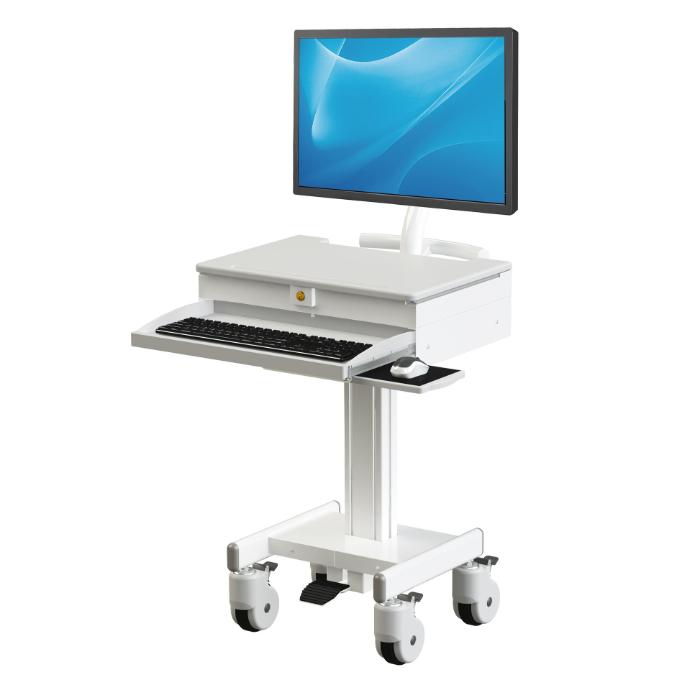
Efficiency Is a Manufactured Outcome
A good cart should feel unobtrusive. It should roll smoothly, turn predictably, and remain stable, allowing staff to focus on patient care rather than equipment handling.
At Diwei, we translate clinical mobility needs into manufacturable, durable, and consistent OEM/ODM cart designs. By treating mobility as a core engineering metric, we help brands deliver products hospitals trust.
Designed around clinical workflows. Optimized for manufacturability and durability.
🔗 Explore our medical trolley solutions: Diwei Medical Trolleys